1. Major Oceanic Flyways & Circular Routes
North Atlantic migration is not a simple north-south transit. Pelagic species leverage the clockwise atmospheric circulation around the North Atlantic Subtropical High (Azores High) and the counter-clockwise flow around the Icelandic Low.
- Manx Shearwater: Undertakes a trans-equatorial loop migration of more than 20,000 kilometres, traveling south along the western European and African shelf breaks to wintering grounds off South America, returning via the western Atlantic.
- Arctic Tern: Executes the longest known migration on Earth, moving from Arctic breeding tundras past western European headlands down to the Antarctic pack ice, tracking wind systems across both hemispheres.
- Great Skua & Pomarine Skua: Follow oceanic fronts and trailing margins of cyclonic storms, migrating from northern island breeding ranges to pelagic wintering sectors off northwest Africa and the Mid-Atlantic Ridge.
- Little Auk: Moves south from High Arctic colonies (Svalbard, Greenland) into ice-free sub-polar waters of the Norwegian and North Seas during late autumn and midwinter.
2. Meteorological Drivers of Passage Movements
Seawatching success depends strictly on barometric pressure changes, wind vector, and precipitation fronts.
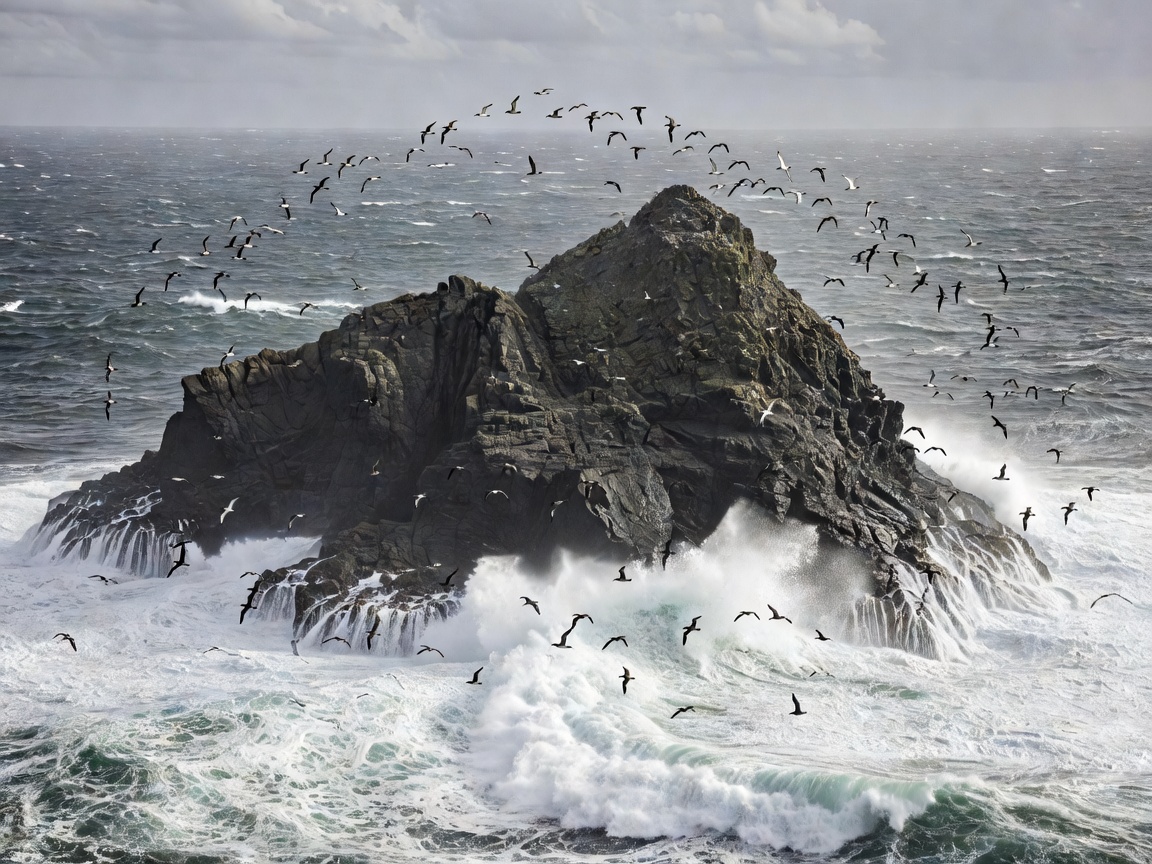
The prime condition for coastal seawatching in western Europe occurs when a deep low-pressure system moves east across the Atlantic, generating sustained west to north-west winds of Force 6 to 8. These onshore winds overcome the birds’ preference for open pelagic water, forcing them into coastal bays and around key promontories such as Cape Clear (Ireland), Bridges of Ross (Ireland), Strumble Head (Wales), and Sumburgh Head (Shetland).
3. Seasonal Migration Timetable
Migration operates across distinct seasonal pulses across the year:
- Spring Passage (March – May): Characterised by rapid, targeted northward transits. Skuas and divers move past coastal points in compact flocks, often tracking close to shore in light headwinds.
- Late Summer Dispersal (July – August): Post-breeding dispersal of alcids and adult gannets. Juvenile birds begin venturing south from high-latitude colonies.
- Autumn Climax (September – November): Peak seawatching window. Major movements of shearwaters, Leach’s Storm-petrels, Sabine’s Gulls, and grey phalaropes following severe gales.
4. Systematic Recording Methodologies
Seawatch logging requires rigorous tally protocols. Counts should be partitioned into standardized 30-minute or 60-minute time intervals. Record wind speed, wind direction, cloud cover, precipitation, and sea swell state at the start of each interval. Note flight direction (e.g., south-southwest) and distance offshore (e.g., within 500m vs. outer horizon) to maintain consistent field records.
Good For
Observing pelagic passage species rarely seen from land during summer, identifying flight silhouettes in heavy seas, and understanding meteorological influences on bird movements.
What To Know
Passage can drop to zero within hours if the wind veers offshore. Sustained viewing in heavy salt spray requires regular lens cleaning and warm multi-layer shelter.