1. Physical Hazards of Atlantic Coastal Cliffs
North Atlantic cliffs consist of varied lithologies including columnar basalt, sandstone, metamorphic gneiss, and marine shale. Sea spray, heavy winter freezes, and burrowing puffins continually erode topsoil and cliff-edge margins.
- Overhanging Turf: Maritime grass frequently extends beyond the solid stone bedrock, creating a false ledge that shears off instantly under foot weight. Never step on unsupported grassy overhangs.
- Puffin Burrow Collapse: Walking across peat slopes riddled with burrows caves in fragile nesting tunnels, killing chicks and risking personal ankle fractures. Stick strictly to established gravel tracks.
- Gust-Driven Updrafts: Offshore ocean winds hit cliff walls and deflect violently upward, producing sudden upward and backward shear capable of toppling an unwary observer.
- Slippery Maritime Lichen: Xanthoria and Caloplaca lichens covering wet coastal rock become slicker than ice when wetted by sea spray or intermittent Atlantic drizzle.
2. Optical Setup & Magnification Strategy
Handheld binoculars are best suited for sweeping coastal skies and tracking incoming birds. Use 8x42 or 10x42 roof-prism binoculars with nitrogen purging and robust rubber armoring. Higher magnifications (12x or greater) are impractical in gale-force winds due to rapid muscle fatigue and persistent image tremor.
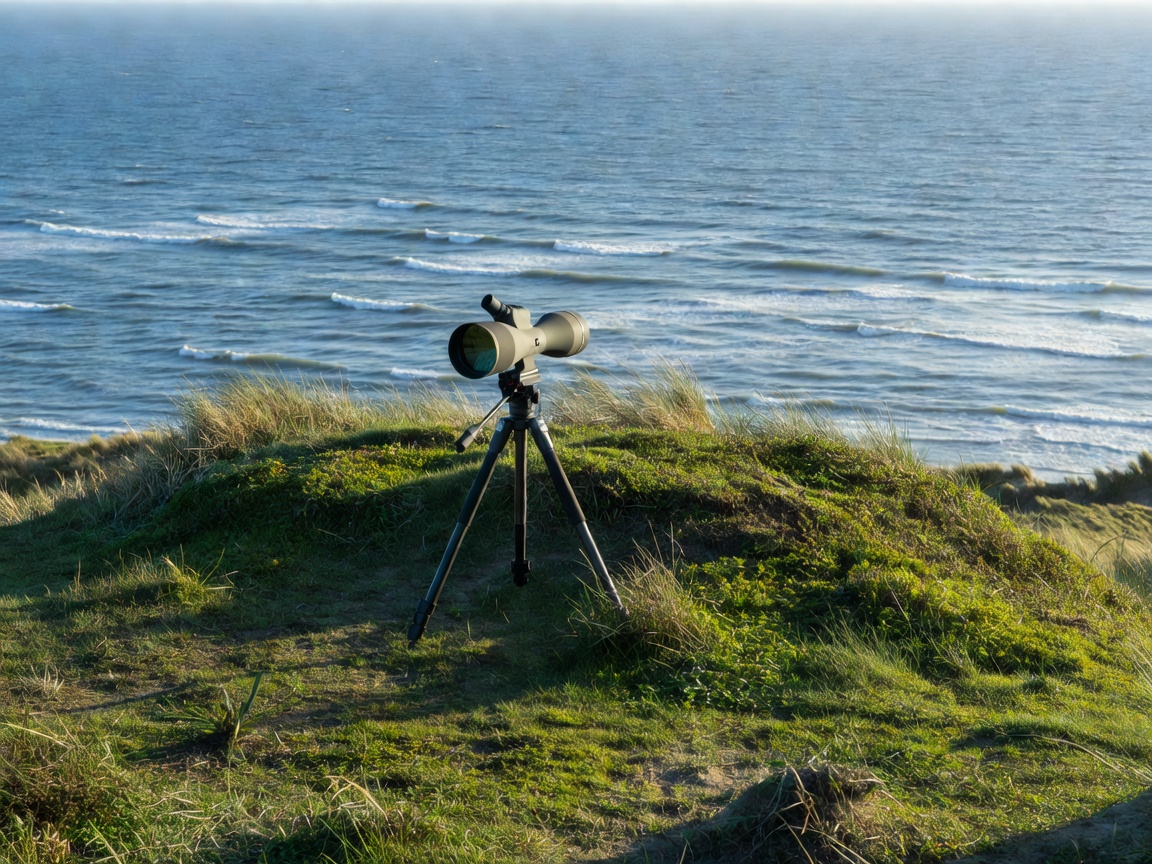
For inspecting stationary cliff ledges at distances of 50 to 200 metres, use an angled 65mm or 80mm spotting scope on a heavy-duty carbon tripod. Angled eyepieces permit comfortable viewing from seated or crouching stances without having to raise the tripod into the wind stream.
3. Wind Management & Weather Awareness
Coastal weather conditions shift in minutes. A falling barometer accompanied by backing winds indicates an approaching low-pressure front. If sustained winds exceed Force 6 (22–27 knots), retreat inland from sheer cliffs. Flying gravel and balance disruption create extreme risks.
Always observe with your back protected by rising terrain where feasible, and carry protective waterproof neoprene coats for all optical tubes to prevent salt crusting on front lens coatings.
4. Colony Ethics & Non-Disturbance Protocol
Cliff birdwatching is strictly observational. Avoid loud vocal communication, sudden vertical stances, or rapid arm movements. If nesting fulmars begin retching stomach oil, or kittiwakes produce sharp, repeated alarm calls, you have breached their tolerance boundary. Step back slowly and steadily without turning your back completely on uneven ground.
Good For
Detailed plumage examination of alcids, recording bill-load contents of provisioning adults, reading alphanumeric field rings, and observing courtship billing.
What To Know
Cliffs have zero safety barriers in wild sub-Arctic terrain. You are entirely responsible for maintaining safe setbacks from sheer vertical drops.